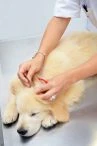
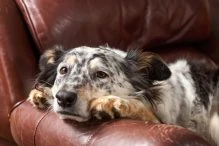
Fleas can become an unpleasant problem for pet owners and dogs if not taken care of. What makes one dog go outside and get fleas and the other does not? A reaction to fleas indicates that the immune system is weak. If the immune system was strong, your dog would be able to fight off naturally fleas. Poor nutrition and stressful environment weakens the defense mechanism against outside bugs.
There are too many chemicals and toxins in flea medications and collars which can damage the nervous system and weaken the immune system with prolonged use. Natural flea control is recommended over veterinarian flea control medicine. Use flea collars that contain natural herbs or essential oils.
Homeopathic remedies for fleas:
If your pet suffers from fleas:
Sulphur 6C or 12C: give only one dose; do not give another dose before one month
The next day, give Ledum palustre 30C to reduce inflammation due to flea bites, itching and repel fleas, give one dose every day, stop giving the remedy when you see skin improvement
One month before the flea season:
Give the nosode psorinum one month before the flea season. Give one dose of 30C once a week for 3 weeks.
Do not give ledum, psorinum and sulphur at the same time, finish with one remedy and move to the next.
Other helpful treatment that can be given at the same time as the homeopathic remedies:
add 1 tablespoon organic unfiltered apple cider vinegar in your dogís drinking water (1 tablespoon per 8 glasses of water). After 10 minutes, the strong odor of the apple cider vinegar will go away.
Herbal rosemary tea rinse can repel fleas. Mix 1 tablespoon of fresh rosemary (or 1 teaspoon of dry rosemary herb) in 1 pint of boiling water and let steep for 10 minutes. Let cool and strain. Pour it over your dog’s coat.
To keep away fleas, your dog needs a healthy immune system and a healthy natural diet. Adding digestive enzymes and probiotic formula for pets will help keep the friendly bacteria in the digestive system balanced.
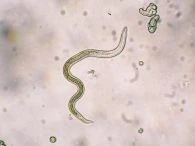
Worms are internal parasites that settle in the small intestines of dogs and cats. The most common worms are tapeworms, hookworms, roundworms and whipworms. Young puppies are more susceptible of getting these parasites.
Tapeworms
The medical term for tapeworms is called cestodiasis. There are many different types of tapeworm species. They can be transmitted by ingestion of infected mites in food, tapeworm eggs, soil, water, canine feces, undercooked infected fish, dog or cat fleas, infected insects, under cooked meat containing larvae, mice and other rodents. Usually, tapeworms are not a serious problem.
Possible symptoms include abdominal pain, lesions of nervous system, seizure, weight loss, flatulence, diarrhea, skin lesions, lesions in eyes and liver, dog might be scooting bottom across the floor, vomiting or may cause no symptoms at all.
You might see some segments in your dog’s stools or white cream colored rice grains around your dog’s anus. They are about 1/4 to 1/2 long.
Homeopathic remedies for tapeworms in dogs, choose only one remedy Filix mass or Granatum
Potency: choose a low potency such as 3X, 3C, 6X, 6C
Dosage: 2 doses a day for 2-3 weeks, check after 2-3 weeks if there is still presence of worms in stools.
Roundworms
Three species of roundworms exist: toxocara canis, toxascaris leonina and toxocara cati. The toxocara cati can be transmitted to people and other dogs, in some cases, a fatal infection might develop. They can reach 2-3 inches long.
Symptoms include dull coat, lack of appetite, pot-bellied, lack of growth, worms seen in vomit and stools, coughing, diarrhea
Homeopathic remedies for dogs, select only one remedy: Cina, Abrotanum, Chenopodium, Santonium, Ferrum Metallicum, Teucrium Marum
Potency: choose a low potency such as 3X, 3C, 6X, 6C
Dosage: 2 doses a day for 2-3 weeks, check after 2-3 weeks if there is still presence of worms in stools.
Hookworms
Possible symptoms include coughing, diarrhea, gums might be pale, constipation, weakness, anemia (due to the fact that these worms feed on blood), lack of appetite, can become life threatening. They are almost impossible to see with the naked eye.
Whipworms
These worms live in the colon of the dog and can reach up to 75mm long. No symptoms are seen at first but as the number of whipworms increases, weight loss, blood in stools and diarrhea may occur.
Because hookworms and whipworms are more of a serious health matter, no recommended homeopathic treatment for these types of worms is recommended unless your dog is followed by a homeopathic veterinarian.
We often associate ringworm with a type of intestinal worm but in fact, it is a contagious fungal infection of the skin transmitted directly by another animal’s infected shedded hair. It eats away the skin and the hair. It is contagious to people, kids and other animals. It has the appearance of a round red crusted patch on the skin. It can be itchy and there is inflammation. Loss of hair may occur as well as dandruff.
Internal causes include a weak immune system, stress, vaccination and poor diet. A strong immune system will help fight or prevent this type of infection.
Homeopathic remedies for ringworm:
Dulcamara 30C potency
Symptoms are worse at night, worse in cold or damp weather, better with movement or warmth, warts, autumn
Dosage: two times a day for a week
Kali sulphuricum 6X or 6C potency
Symptoms are better in cool or open air, worse in the evening or warmth, yellowish discharge, yellow mucus, dandruff, scaly skin, eczema
Dosage: two times a day for a week
Thuja Occidentalis 30C
If it is due to vaccinosis (a reaction to a vaccine), warts or other skin eruptions in addition to ringworm
Dosage: once a day for four days
Tellurium 30C
Symptom: lesions are in circular form and appear on both sides of the body. Eyes and ears might be affected.
Dosage: twice a day for one week.
CHRYSAROBINUM 6C
Dosage: use only disease has progressed to a crusty stage, three times a day for five days.
Bacillinum (nosode of tuberculosis) 30C or 200C
Give this nosode at the end of the treatment when all the problem has cleared up.
Dosage: two doses at two week intervals.
In addition to the above recommendations, you can include external skin treatment and herbal treatment to balance and boost the immune system.
For external skin treatment relief:
Use calendula oil or cream mixture. Apply the mixture daily. This can be done at the same time as the homeopathic remedies.
To boost the immune system, use alcohol free tincture of saint John’s Wort and Oregon grape. The main medicinal properties of oregon grape are immune system enhancer, antimicrobial, anti-inflammatory, antiparasitic, liver and digestive tonics and helps skin heal.
The main properties of Saint-John’s Wort are skin affinities, wound healing, antiseptic, antiviral and immunostimulant.
Dosage: 6 drops per 10 pounds of body weight, once or twice a day, five days on, 2 days off for one month then take 1-2 weeks off and repeat as needed.
These herbs should be given when the homeopathic treatment is finished.
Home treatment for open wounds, punctures and lacerations in dogs
Dogs love to play, run and chase. Sometimes they have too much fun and get hurt. Dogs are similar too kids in the sense that they can get bruised or lacerated. The goal with homeopathic remedies is to act quickly to prevent infection and stop the bleeding.
Choose the remedy according to the image symptom:
Aconitum Napellus
use in the first stage of a wound
feverish state, heat, dryness and thirst
fearful state
skin may be hot and swollen
Apis Mellifica
use for puncture wounds that are red, sensitive with burning pain
puffiness and swelling
edema
heat aggravate
no thirst
Arnica Montana
use only where the skin remains unbroken such as a bruise or blows, never use arnica in an open wound
bruise is blue or purple in color
Belladonna
dry, heat, intense pain and redness
pus
fever
Bufo rana:
slight injuries, boils and blisters
pus
intense pain
itching
Calendula
use for lacerations that are deep that involve nerve endings
bleeding, infection
the wound may look jagged or torn
use this remedy internally and externally (lotion or cream)
Echinacea
crush injuries, infection
dirty discharge
blood poisoning
Hepar Sulphuris
bloody discharge, may be an odor and formation of pus
sensitive to the touch, inflammation
infection
Hypericum
use for a cut or torn tissue, gunshot wound, crush wounds, lacerated wounds
intense pain
great for splinters and thorns
pain runs along the nerves
muscular twitching
use this remedy internally and externally (lotion or cream)
Lachesis
wounds that are slow to heal
blueish with purple or black edges
easily bleed
blood does not coagulate, blood may be dark
Ledum
wound was created with a sharp object
wound feels cold to the touch
bluish color
prevents tetanus
splinters and thorns
Phosphorus
small wound that bleeds a lot, wound closes, re-opens and bleeds
bloody discharges
blood does coagulate
Pyrogenium
high fever, infection
wound is swollen and inflamed
discharge has strong odor
Rhus tox
wound is infected
inflammation, tearing pain, muscle may be affected
sprains
dog will show improvement upon movement
Silica
splinters and foreign objects, abscess, ulceration
wound refuses to heal
nervous dog
Staphysagria
wound is from sharp object such as a knife, glass, clean cut wound, nervousness
use in post-surgery
discharge may be green
use this remedy internally and externally (lotion or cream)
Sulphuric acid
wound that don’t heal, dark blood, bruised look
scars are red, blue and painful
dog is irritable
Dosage: give as soon as the injury occurs Use less than 3C, 3X, 6C, 6X, 12C or 12X potency, one dose every 30 minutes, for a maximum of 6 doses.
To disinfect the wound, make a solution of salted water. Boil one liter of water with 1 teaspoon of salt for about 5 minutes, let cool and pour over the wound. Keep solution away from your pet’s eyes. Then apply calendula, hypericum or staphysagria or a combination in cream or lotion.
Cystitis is an inflammation of the bladder. It is commonly referred as urinary tract infection (UTI) or lower urinary tract disease (LUTD). You will notice that your dog tries to urinate and only a few drops might come out and there may be some blood in the urine. Your dog may start to urinate in odd places; there might be pain and straining. Fever and infection are rare with cystitis. If there is complete obstruction, your dog vomits or becomes lethargic, you need to see the veterinarian immediately.
Possible causes are sudden exposure to cold, a bacterial infection or urinary sediment or calculi (stone formation) that irritate the lining of the bladder due to cereal based commercial foods.
If there is not complete obstruction and the dog’s energy is still good, you may try the following remedies:
Aconitum napellus 30C
Symptoms: Begin suddenly after exposure to cold or fright, primary complaint is frequent attempts to urinate, happens all of a sudden
Apis mellifica 30C
Symptoms: Burning sensation mostly at the end of urination, dog is not thirsty, animal feels better with cold and worse with warmth, indifference, urine may be dark colored
Cantharis 30C
Main symptoms are intense pain and straining, bloody urine, animal may cry out, only a few drops come out
Lycopodium clavatum 30C
Main symptom is digestive upsets such as gas or diarrhea at the same time as urinary problem, dog retains urine, worse after 4pm or urination, might be red streaks of blood in the urine
Mercurius (corrosivus or vivus or solubilis) 6C
Symptoms: has diarrhea at the same time as straining to urinate, mucous or blood in the stool or urine, dog is irritable and restless, use Mercurius corrosivus for males and for females, use mercurius vivus or solubilis
Nux Vomica 30C
Main symptom: Frequent urging to urinate with no success, may be blood in the urine, dog used antibiotics in the past for urinary infection, irritable, worse in the morning or in open air
Pulsatilla 30C
Symptoms: Remedy suggested more for females, involuntary urination, dog needs a lot of attention, used antibiotics in the past, very little urine comes out, blood and mucus in urine, worse when lying down, better with cold air
Sarsaparilla 30C
Main symptom: pain at the end of urination, dog may urinate standing instead of squatting down, happened because dog was exposed to damp or chilled weather
Thlaspi bursa pastoris 6C
Symptoms: Mostly used in chronic recurring cases of cystitis, tendency to phosphate crystals, this remedy might unblock urethral obstructions, the urine might look like brick dust, bloody urine
DOSAGE:
For all remedies above (use only one remedy at the time): start with every 30 minutes, if dog is better, lengthen the time between dosage, do not exceed 4 dosages in the same day.
NUTRITION:
Fast your dog on broth and boiled chicken (boneless, skinless) for 24 hours.
Orchitis is pain and inflammation of one or both testicle. It is mostly due to a viral, parasites or bacterial infection. These small organisms travel through the blood and lymphatic system and reach the testes via the urethra. The main micro-organisms include Neisseria gonorrhoeae, Chlamydia trachomatis, E. choli, Klebsiella, pseudomonas aeruginosam, staphylococcus species, and streptococcus species. It might be contracted during sexual intercourse, urine or urethral discharges. The testicle might be swollen due to bruising, laceration or puncture wounds.
Symptoms of orchitis
Pain with urination
Scrotal swelling, discharge or reddish
Hot and swollen testicle(s)
Discharge from penis
Feeling of heaviness
Swollen groin area and pain
Pain during breeding or ejaculation
Testicle pain aggravated by bowel movement or straining
Fever
Homeopathic home remedy
Arnica Montana
Symptoms: first remedy of choice if swelling was due to bruising or injury but the skin remains unbroken
Conium maculatum
Symptoms: swelling is due to bruising or trauma, testicle is hard, dog is usually sexually excited
Mercurius Corrosivus
Symptoms: greenish discharge from penis, discharge may contain some blood, skin is ulcerated, urine may be suppressed
Staphysagria
Symptoms: use this remedy if swelling is due to laceration, mostly right testicle is affected, burning and stinging pain
Clematis erecta
Symptoms: urination may be difficult, mostly the right testicle is affected, testicle is painful and hard, worse at night, better with open air, swelling was brought on by cold or damp weather,
Pulsatilla
Symptoms: suppressed gonorrhoea, mostly the right side is affected, yellow discharge, testicle is painful, red and not hard, inflammation, soreness, inflammation of the prostate gland
Belladonna
Symptoms: dog is irritable, aggressive, sensitiveness, intolerance of pain, condition happened sudden and is intense, testicle is hot, red and painful, feverish conditions
Rhododendron
Symptoms: cold or humid weather, rain, wind and thunder make the condition worse, pain, right side is mostly affected, atrophy of the testicle, hardness of testicle
Rhus toxicodendron
Symptoms: scrotum is swollen, inflammation of the testicle, tearing pain, better with movement
Spongia Tosta
Symptoms: hardness and swelling of testicle, pain, recurring condition
Dosage and potency for all above remedies: Use only one remedy at a time, use 30C potency, three doses a day about 4 hours apart, for 3 days, reduce the dosage if condition is better.